Tree Roots and Driveway Damage in Derby: Why Surfaces Lift and What Repairs Cost
A driveway that has developed a hump around a tree is one of the more expensive problems in domestic hard landscaping, mostly because the obvious fix is usually the wrong one. Tree roots do not push up through tarmac out of malice. They grow where there is oxygen, moisture and low soil compaction, and the loose sub-base under a driveway is often the most hospitable ground available in a compacted front garden. Around 90% of a mature tree's root mass sits in the top 600mm of soil, and the majority of that within the top 300mm - which is exactly the depth a standard driveway build-up occupies. Add Derby's heavy Mercia Mudstone clay soils, which shrink and swell dramatically with moisture, and you have two mechanisms working at once. Here is what is actually happening under there and what it costs to sort out.
Why Roots Lift a Driveway, and What the Clay Is Doing
There are two separate things going on, and telling them apart determines the repair.
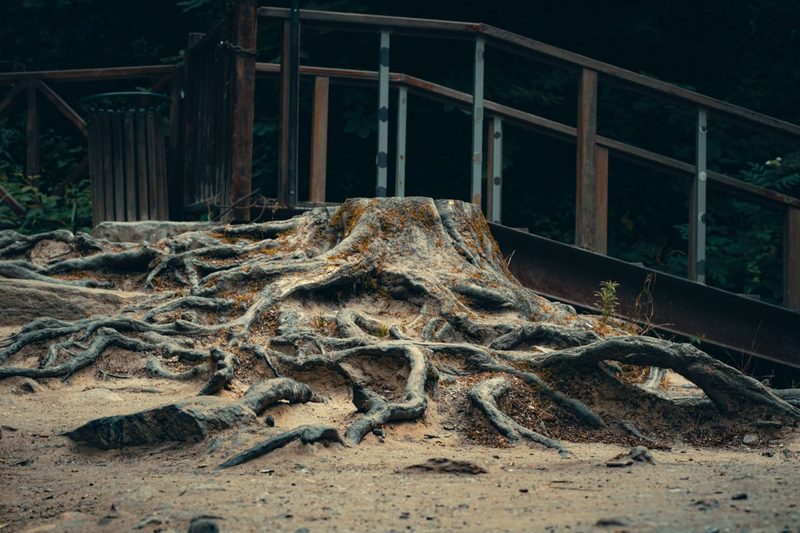
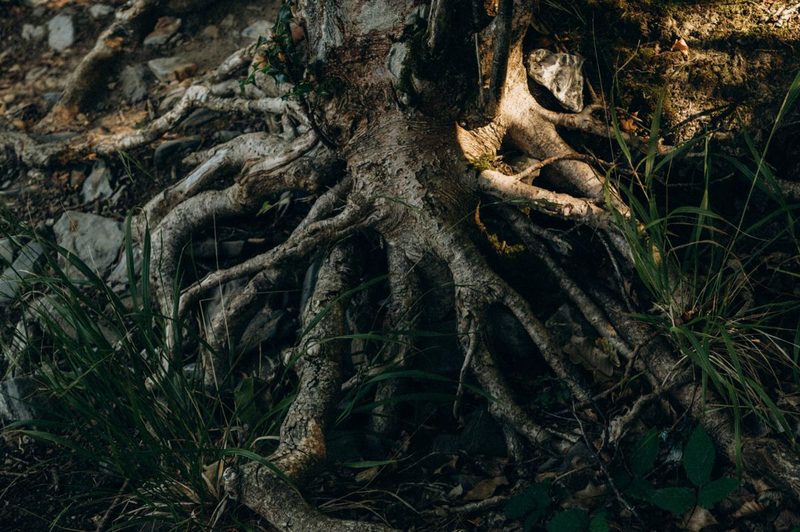
The first is straightforward physical displacement. A root grows, thickens with each season's secondary growth, and the surface above it has to go somewhere. A root that adds 5mm of diameter a year will lift a tarmac surface by 50mm in a decade. This produces a distinctive damage pattern: a linear ridge running radially outward from the trunk, with cracking along the crown of the ridge, and the worst displacement between 1 and 4 metres from the trunk rather than right at the base.
The second is clay shrinkage, and in Derby this is often the larger effect. Derby sits substantially on Mercia Mudstone, a firm clay with a high shrink-swell potential. A mature oak or poplar can extract several hundred litres of water a day from the soil in summer. That desiccation causes the clay to shrink, the ground to subside, and the driveway to sink - not lift - in a zone around the tree. Then the winter rain rehydrates it and the ground heaves back up. Repeated over years, that cyclic movement cracks rigid surfaces like concrete and block paving far more effectively than root pressure alone.
The tell is which direction the damage goes. Localised humps and ridges are roots. Dishing, subsidence and seasonal movement that opens and closes are clay. Many Derby driveways have both, and the repair strategy differs - which is worth establishing before anyone starts quoting. A proper assessment of the ground and the root layout is the starting point, and Tradesmart Driveways & Landscaping will normally dig a small inspection pit rather than guessing from the surface.
The Species That Cause Most of the Trouble
In Derby's residential streets, the usual suspects are lime, poplar, willow, oak and Norway maple. Lime is enormously common as a street tree across Derby, and it is shallow-rooting with vigorous surface roots. Poplar and willow have the highest water demand and are the worst offenders for clay shrinkage - both have documented influence distances exceeding 20 metres on shrinkable clay. Silver birch and rowan, common in front gardens, are much less problematic on both counts.
Why You Probably Cannot Just Cut the Root
This is the instinct everyone has and it is worth understanding why it is usually a bad idea.
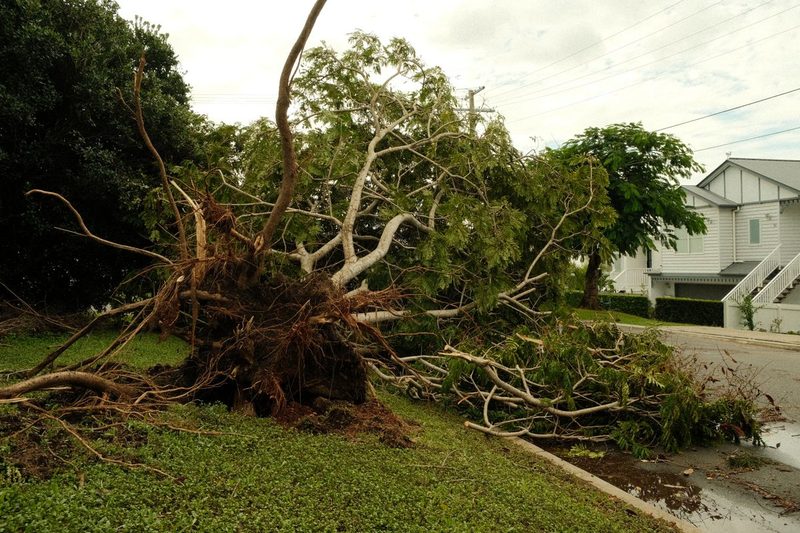
Cutting a structural root within the root protection area destabilises the tree. The general guidance, following BS 5837, defines a root protection area as a circle with a radius of 12 times the trunk diameter, and severing roots inside that area meaningfully increases windthrow risk. A mature lime that comes down in a February gale onto a car, a conservatory or a neighbour's roof is a far more expensive outcome than a cracked driveway.
There is also the legal question, which catches people out. If the tree is protected by a Tree Preservation Order, or stands within a conservation area, cutting its roots is an offence in the same way that lopping its branches is. Derby has several conservation areas and a substantial number of TPO'd trees on private land. Penalties for unauthorised works to a protected tree can reach an unlimited fine in the Crown Court. GOV.UK's guidance on Tree Preservation Orders and trees in conservation areas explains what is covered and how to apply for consent.
And if the tree belongs to the council or sits on the highway verge, it is not yours to touch at all. Derby City Council handles highway tree queries, and reporting the damage to them is the correct first step rather than taking a saw to it. You can raise it through Derby City Council.
What Root Pruning Can Legitimately Do
Done properly, by an arboriculturist rather than a landscaper, selective pruning of small non-structural roots under 25mm diameter, cut cleanly with a sharp tool rather than torn with a digger bucket, is acceptable within limits. The work should be specified after a root investigation, usually by air spade or hand excavation, which exposes the roots without damaging them. Expect £400 - £900 for an arboricultural root investigation and report on a domestic property in Derby. That sounds like a lot until you price a failed driveway relaid twice.
Repair Costs by Surface Type in Derby
What the damage costs to fix depends heavily on what the driveway is made of, because the surfaces respond very differently to ground movement.
Block paving is the most forgiving and the cheapest to remedy. Because it is a flexible system of individual units, a lifted area can be taken up, the sub-base regraded, and the blocks relaid using the same materials. Lifting and relaying a damaged section runs £45 - £75 per square metre in Derby, so a typical 8 - 12m² affected area comes to £360 - £900. This is the single strongest argument for block paving near a mature tree. We have gone into the relaying process in more detail in our guide to block paving repairs and relaying in Derby, which covers sunken areas and weed growth alongside root damage.
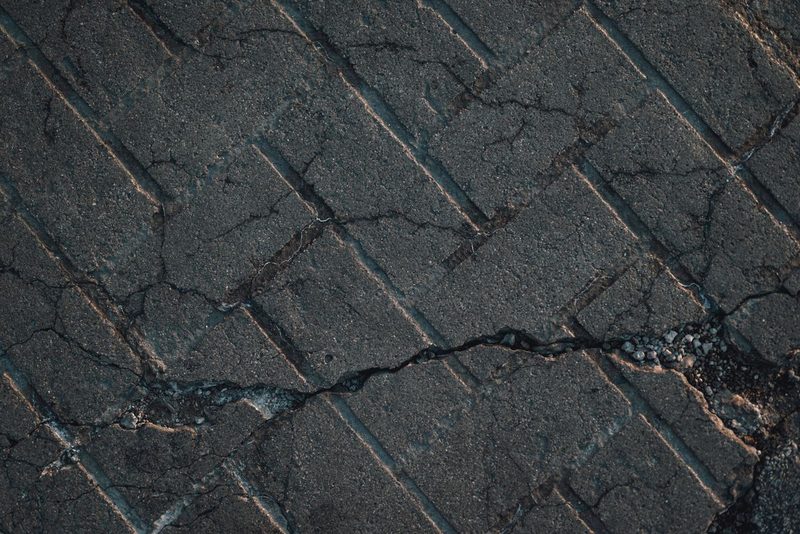
Tarmac is intermediate. Small ridges can be planed off and overlaid, but the fix is cosmetic and the root keeps growing. A localised patch is £250 - £550, and a full resurface of a standard Derby driveway of 40 - 50m² is £2,400 - £4,000. Tarmac over a growing root is a repeating cost rather than a fix.
Resin bound is less forgiving, because it is laid over a rigid base - usually tarmac or concrete - and the resin layer itself is only 15 - 18mm thick. If the base cracks, the resin cracks with it. Repairing a resin section means cutting out and relaying, and colour matching a repair to a weathered original is genuinely difficult. Expect £75 - £120 per square metre for a cut-out repair, and accept that the patch may be visible.
Concrete is the least forgiving of all. A rigid slab lifted by a root cracks, and once cracked it cannot be repaired in any meaningful sense - only broken out and replaced, at £90 - £140 per square metre including removal. Concrete is the wrong specification anywhere near a mature tree.
Building a Driveway That Can Live With a Tree
If you are relaying anyway, the right design avoids the whole problem for decades rather than buying five years.
The single most effective measure is a root barrier. A rigid HDPE panel, typically 600 - 900mm deep, installed vertically between the tree and the driveway, redirects roots downward rather than horizontally under the surface. Installed properly with ribbed deflection and a sealed top edge so roots cannot grow over it, a root barrier costs £45 - £90 per linear metre in Derby including excavation. On a 10-metre run that is £450 - £900, which is less than one round of repairs.
Cellular confinement, sometimes called a no-dig build-up, is the other approach. Instead of excavating down through the root zone, a geocellular grid is laid on the existing ground within the root protection area and filled with angular stone, building the driveway up rather than down. It avoids root severance entirely and allows air and water through to the root zone. It costs more - roughly £85 - £130 per square metre for the base build-up - and it raises the finished level by 150 - 250mm, which affects thresholds and drainage.
Permeable surfacing helps on both counts. Permeable block paving or a permeable resin build-up lets water reach the root zone rather than shedding it all to a drain, which reduces the summer soil desiccation that drives clay shrinkage. It also generally avoids the need for planning permission on a front garden, where an impermeable surface over 5m² draining to the highway does require it. The Planning Portal's guidance on paving front gardens sets out the rules.
Getting the Levels and the Drainage Right
Where a driveway meets a mature tree, do not create a low point that ponds against the trunk. Waterlogged soil around the root collar causes collar rot, which kills trees slowly and then leaves you with a dead mature tree to remove at £800 - £2,500. Fall the surface away from the trunk and keep the finished level at or slightly below the original soil level at the collar.
Derby's Soil and Climate: Why This Is a Local Problem
Derby has a particular combination that makes tree-related driveway damage more common than the national average.
The Mercia Mudstone Group underlies most of the city and much of southern Derbyshire. It is a firm to stiff clay with medium to high shrink-swell potential, which means it moves measurably with seasonal moisture change - typically 20 - 40mm of vertical movement across a year in the zone influenced by a large tree, and more in an exceptional summer.
The rainfall pattern amplifies it. Derby sits at roughly 650 - 700mm of annual rainfall, which is relatively low for the Midlands, distributed unevenly with a genuinely dry period through late spring and summer. Dry summers on shrinkable clay are precisely the condition that produces subsidence, and Derby gets them regularly. The wet autumn and winter then rehydrate the clay and the ground heaves back. That annual cycle is doing damage to rigid surfaces every single year, independent of any root pressure.
The housing stock matters too. Derby's interwar and 1950s suburbs - Allestree, Mickleover, Littleover, Chaddesden - were laid out with generous front gardens and street tree planting, and those trees are now 60 to 90 years old and at full size. A great many Derby driveways were laid in the 1990s and 2000s next to trees that were then half the size they are now.
On the trade side, Derby and the East Midlands have a reasonable supply of driveway contractors, but the ones who understand root protection areas and will specify a no-dig build-up rather than simply digging out to 250mm are a much smaller group. Ask specifically what the contractor proposes to do about the tree - if the answer is "we'll cut through whatever's in the way," find someone else.
Frequently Asked Questions
Can I cut tree roots that are lifting my driveway in Derby? Not without care, and sometimes not at all. Cutting structural roots within the root protection area - a radius of roughly 12 times the trunk diameter - destabilises the tree and increases windthrow risk. If the tree has a Tree Preservation Order or stands in a conservation area, root cutting is an offence carrying potentially unlimited fines. If it is a council or highway tree it is not yours to touch. Selective pruning of small roots under 25mm, specified by an arboriculturist after a proper root investigation, is the legitimate route.
How much does it cost to repair a driveway lifted by tree roots? It depends on the surface. Block paving is the cheapest to remedy at £45 - £75 per square metre to lift and relay, so a typical affected area comes to £360 - £900. A tarmac patch is £250 - £550, or £2,400 - £4,000 for a full resurface. Resin bound cut-out repairs run £75 - £120 per square metre with visible colour matching issues. Concrete cannot really be repaired - only broken out and replaced at £90 - £140 per square metre.
What is the best driveway surface next to a mature tree? Block paving, by a clear margin. Because it is a flexible system of individual units laid on a compacted base, sections can be lifted, the base regraded, and the same blocks relaid without any visible patch. Resin bound and concrete are both rigid and crack with ground movement. Whatever the surface, a root barrier or a no-dig cellular build-up matters more than the surface choice itself.
Does a root barrier actually work? Yes, if it is installed properly. A rigid HDPE panel 600 - 900mm deep, set vertically between tree and driveway with ribbed root deflection and a sealed top edge so roots cannot grow over it, redirects roots downward rather than horizontally. Cost in Derby is £45 - £90 per linear metre including excavation, so around £450 - £900 on a 10-metre run - less than a single round of repairs on most surfaces.
Is my driveway sinking or being lifted? Look at the damage pattern. Localised humps and linear ridges running outward from the trunk, worst 1 - 4 metres from the base, are root displacement. Dishing, general subsidence, and cracks that visibly open in summer and close in winter are clay shrinkage - which on Derby's Mercia Mudstone can produce 20 - 40mm of seasonal vertical movement near a large tree. Many Derby driveways have both, and the repair approach is different for each.
Ready to work with Trade Smart Driveways & Landscaping?
Let's connect! We’re here to help.
Send us a message and we’ll be in touch.
Or give us a call today at 111-222-3333
Agency Contact Form
More Marketing Tips, Tricks & Tools