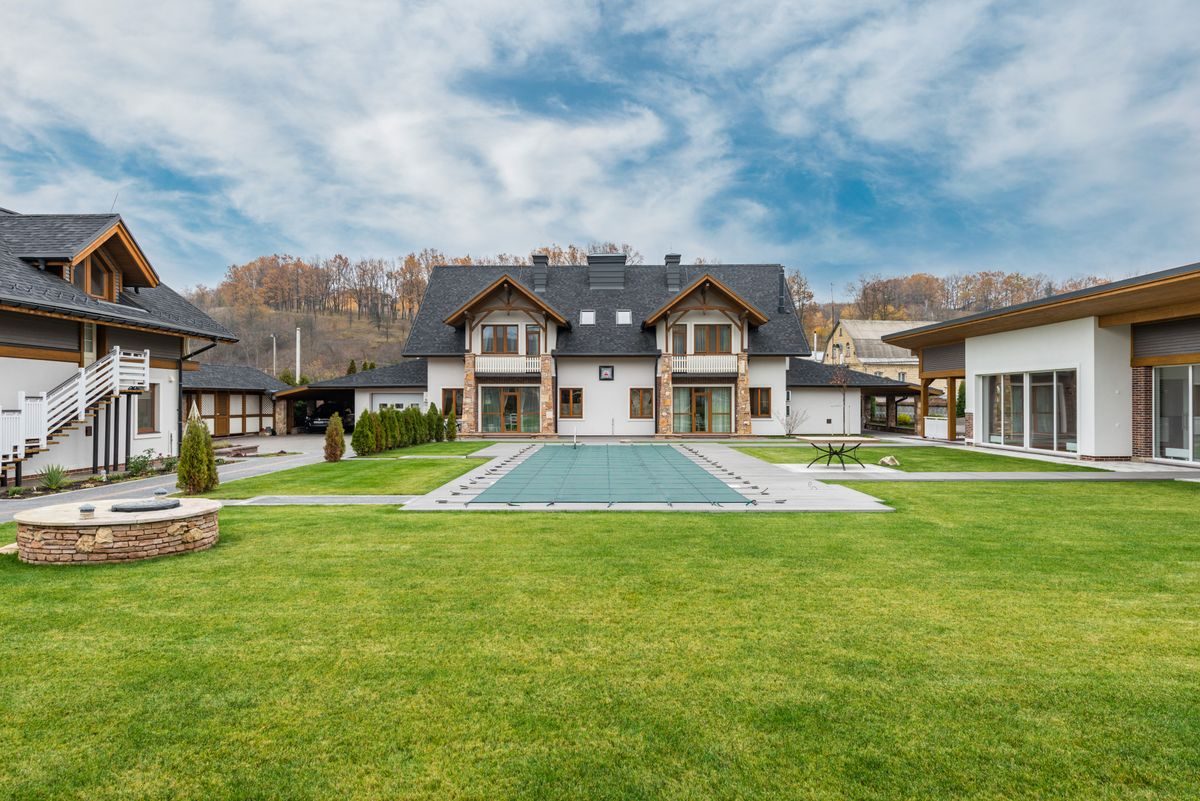
Block Paving Patterns in Derby: Herringbone, Basketweave or Stretcher Bond for Your Driveway
Choosing between block paving patterns in Derby looks like a style decision, and most people treat it that way. It's actually a structural one. The pattern decides how well 2,500 individual blocks on a typical 50m² drive lock together when you turn the steering wheel on them every morning, and how much of the surface starts to drift, open up and rut after a few winters. It also moves the price. A 45-degree herringbone can add £10-£20 per m² over a simple stretcher bond, which is £500-£1,000 on a two-car drive, because every edge block needs an angled cut. Derby gets roughly 650-750mm of rain a year, well under the UK average of about 1,160mm, but it falls on slow-draining clay through a wet season that runs from October to March. That combination is hard on a drive with a weak pattern. Here's how the main layouts compare, what each costs in 2026, and which suits which kind of Derby house.
Block Paving Patterns in Derby: Why the Layout Matters More Than It Looks
Block paving isn't glued or set in concrete. Each block sits on a 30-50mm bed of compacted sharp sand, held in place by the sand in its joints, by its neighbours and by a fixed edge around the outside. Engineers talk about three kinds of interlock: vertical (blocks can't push down past each other), rotational (they can't tip) and horizontal (they can't slide sideways). The pattern controls the third one, and that's the one cars test.
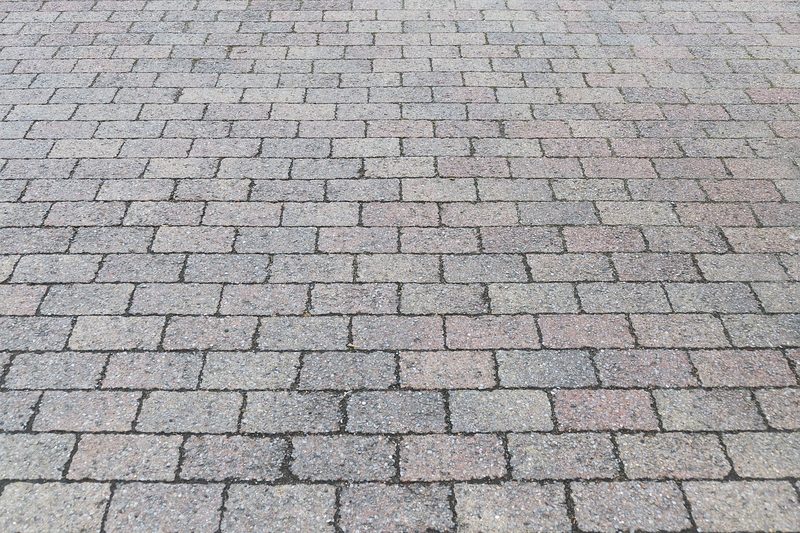
When a car turns, brakes or does a three-point turn on a narrow Derby frontage, the tyres push the blocks sideways. On a pattern with long, straight, continuous joints, the blocks can shuffle along those lines. Installers call this creep. Over two or three years you see joints opening up, sand washing out, the soldier course being pushed outwards and blocks rocking near the dropped kerb. A pattern with staggered, zig-zag joints has no straight line to slide along, so the load spreads across dozens of blocks instead of a row of them.
The precast paving trade body Interpave publishes guidance on concrete block paving design and laying, and herringbone is the pattern it and most manufacturers point to for anywhere vehicles turn. If you'd like someone to look at your drive and tell you which layout suits how you actually use it, Tradesmart Driveways & Landscaping can come out and measure up for a free quote.
Herringbone Block Paving in Derby: 45 or 90 Degrees?
Herringbone is the standard choice for driveways, and for good reason. Blocks are laid in a zig-zag, each one at right angles to the next, so no joint runs more than about one and a half block lengths before it's broken. We lay herringbone on the large majority of Derby drives we quote, probably 7 or 8 out of every 10. The question is usually which angle.
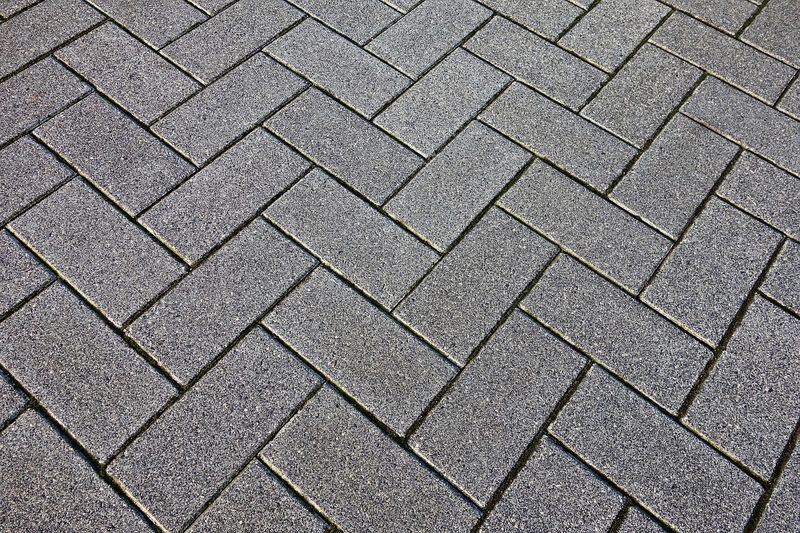
90-degree herringbone
The zig-zag runs square to the house and the edges. It's the cheaper of the two because the blocks meet the border at right angles, so most edge cuts are simple straight cuts. Waste runs at around 5-7%. It interlocks well and suits most car-only drives, particularly long, narrow ones where traffic mostly goes straight in and out.
45-degree herringbone
The zig-zag runs diagonally to the edges. It's the strongest layout you can choose, because the joints sit at an angle to the direction of travel whichever way the car moves. That matters on drives where you swing in from the road at an angle, or where two cars shuffle around each other. The catch is cutting. Nearly every block that meets the border has to be cut at 45 degrees, so waste rises to around 8-12% and a two-person team lays maybe 25-30% less area per day. On a small Victorian frontage, where the perimeter is long compared with the area, that adds up quickly.
Our honest view: 90-degree is fine for most straight-in drives, and 45-degree is worth the extra £10-£20 per m² where cars turn on the paving itself.
Stretcher Bond, Basketweave and Random Multi-Size: Where Each Fits
Herringbone isn't the only option, and the other patterns have their place. It's just that the place isn't always under a turning car.
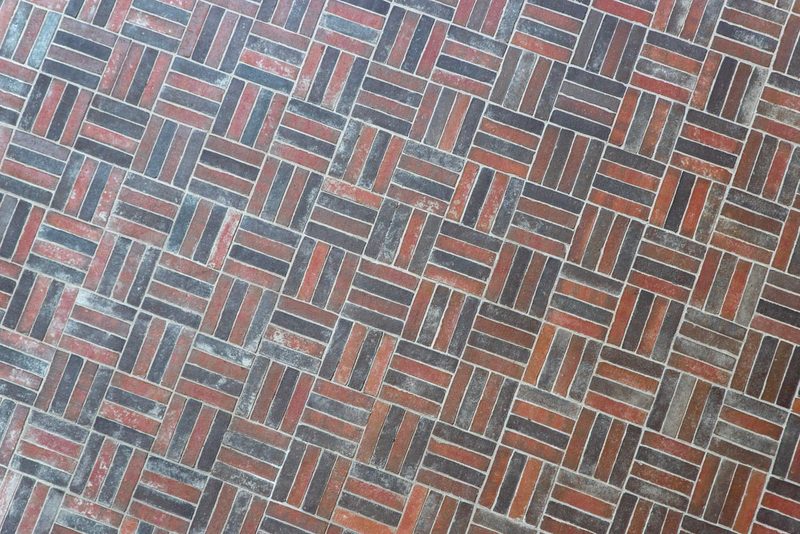
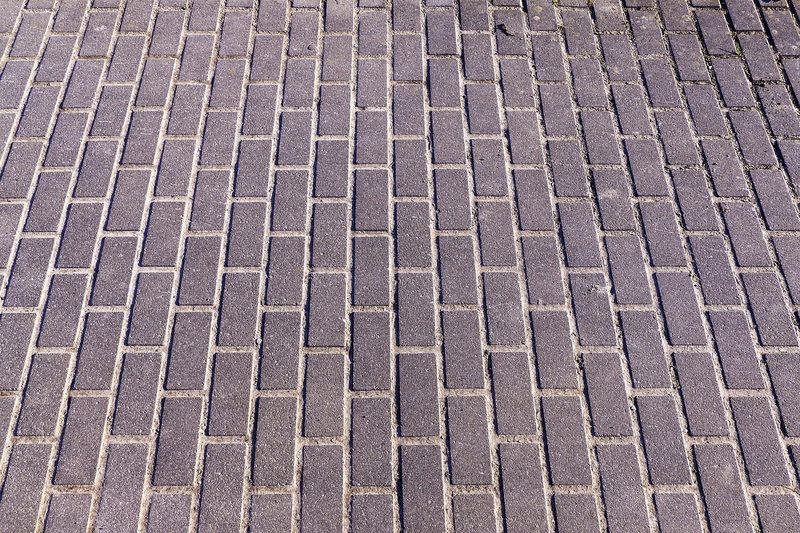
Stretcher bond is blocks laid in straight rows, each row offset by half a block, like a brick wall. It's the quickest pattern to lay, waste is low at around 3-5%, and it looks tidy and modern. The weakness is the long, continuous joints running along the rows. If you choose it for a drive, the rows should run across the direction of traffic, not along it, so the tyres cross the joints instead of riding down them. Laid that way, it holds up reasonably well for straight-in parking.
Basketweave is pairs of blocks laid side by side, alternating direction, so it looks like woven squares. It's a lovely pattern for patios and paths. On a driveway it's the weakest of the lot, because its joints run continuously in both directions, giving blocks two easy lines to creep along. We'd only use it on a drive as a decorative panel in an area cars don't turn on, maybe 4-6m² by the front door.
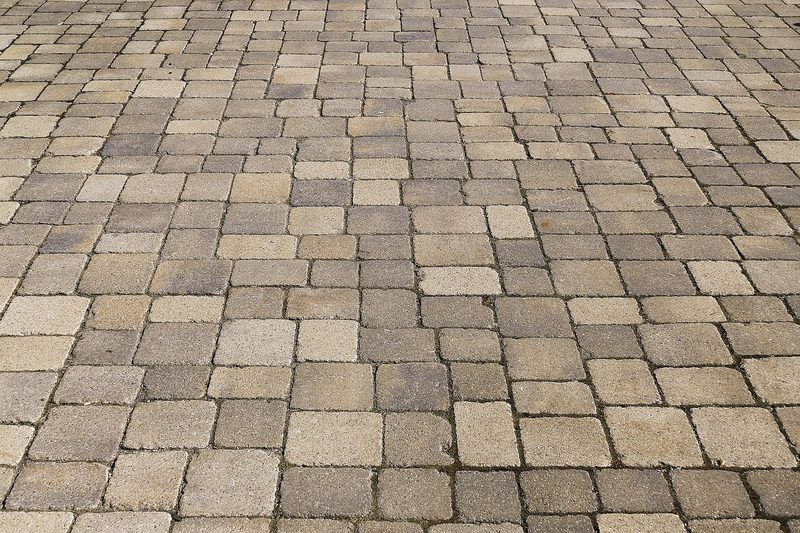
Random or multi-size layouts use blocks in two or three sizes, often tumbled with rounded edges for a cottage look, laid in courses of mixed lengths. They suit older and rural-style homes and hide wear well. Interlock is decent as long as the installer keeps the joints properly staggered, but sorting and placing mixed sizes is slower, and the blocks cost more, so this tends to be the most expensive look.
What Each Block Paving Pattern Costs in Derby in 2026
These are typical installed prices for Derby in 2026, including excavation, a 150-200mm sub-base, laying course, edging and VAT. The base work is the same whichever pattern you pick. The differences come from waste, cutting time and block type.
- Stretcher bond, standard 60mm concrete blocks: £75-£110 per m²
- 90-degree herringbone, standard 60mm blocks: £80-£120 per m²
- 45-degree herringbone, standard 60mm blocks: £85-£130 per m²
- Basketweave (usually patios and paths): £80-£115 per m²
- Random multi-size tumbled blocks: £95-£150 per m²
- Permeable block paving in herringbone: £95-£140 per m²
So on a typical 50m² two-car drive, stretcher bond might come in around £4,500 and the same drive in 45-degree herringbone around £5,500. Colour makes far less difference than people expect, often only £2-£5 per m² between a standard grey and a brindle or charcoal mix.
Before signing anything, check the quote names the pattern, the block thickness and the border detail, and that the installer is happy to show you a drive they've done. Searching for a firm through TrustMark, the government-endorsed scheme for vetted trades, is one sensible way to check credentials.
Still deciding between block paving and tarmac?
If you haven't settled on block paving yet, the pattern question can wait. We've covered the wider choice in more detail in our guide to tarmac vs block paving driveways in Derby, including cost, repairs and weeds.
Borders, Soldier Courses and Kerbs: What Holds the Pattern Together
No pattern works without a solid edge. Block paving is a flexible surface, and if the outside edge can move, the whole field of blocks inside can spread. Most of the creep problems we're called out to fix in Derby start at the border, not in the middle.
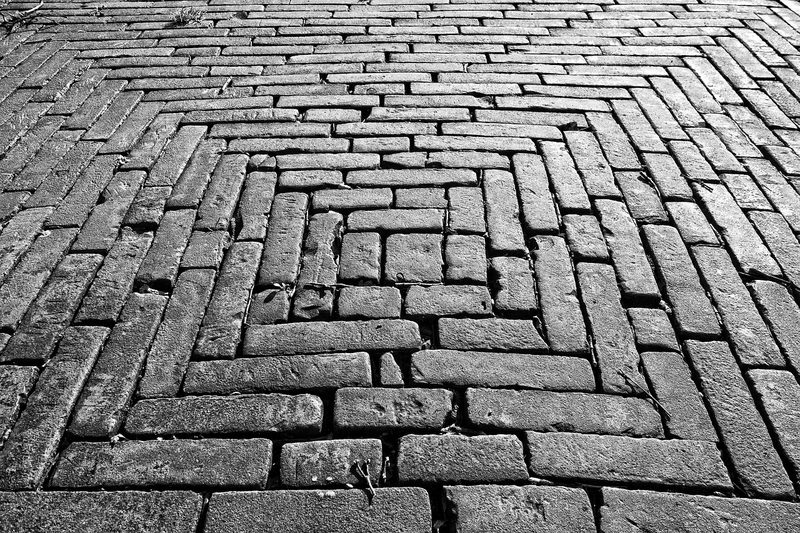
The usual edge is a soldier course: a single row of blocks laid side by side with their short ends facing the border, often in a contrasting colour. A sailor course is the same blocks turned lengthways. Either way, the border blocks should sit on a concrete bed with concrete haunching packed up the back, roughly 100-150mm wide, so they can't be pushed outwards. Where the drive meets a lawn or flower bed, a precast concrete edging kerb set in concrete does the same job. Laying border blocks loose on sand to save £200 is one of the commonest shortcuts we see, and it's usually the first thing to fail.
A double soldier course, two rows deep, looks good on bigger drives and adds roughly £8-£15 per linear metre. On a tight terrace frontage, though, it can eat 15-20% of the paved area, so a single row usually looks better there.
50mm, 60mm or 80mm Blocks: Thickness for a Derby Driveway
Block paving comes in three common thicknesses, and the pattern only works if the block is thick enough for the load.
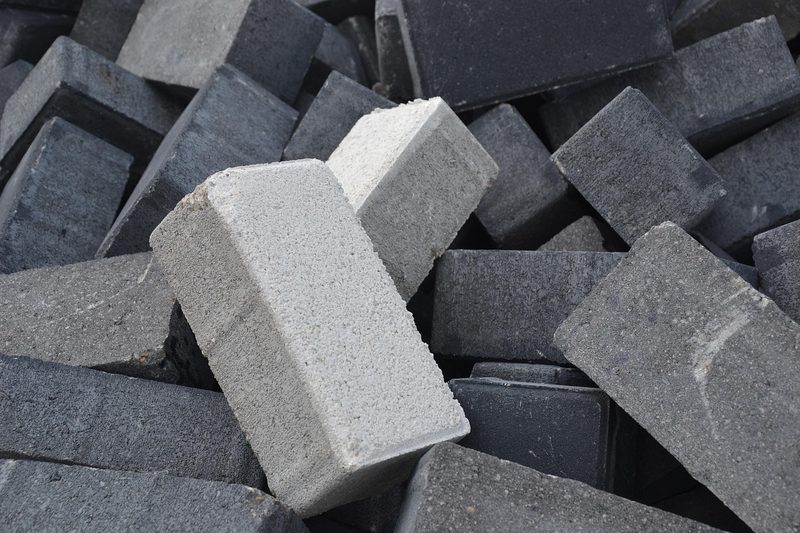
- 50mm: for patios, paths and garden areas only. Not suitable for cars.
- 60mm: the standard for a domestic driveway with cars and small vans up to about 3.5 tonnes. Most Derby drives are 60mm.
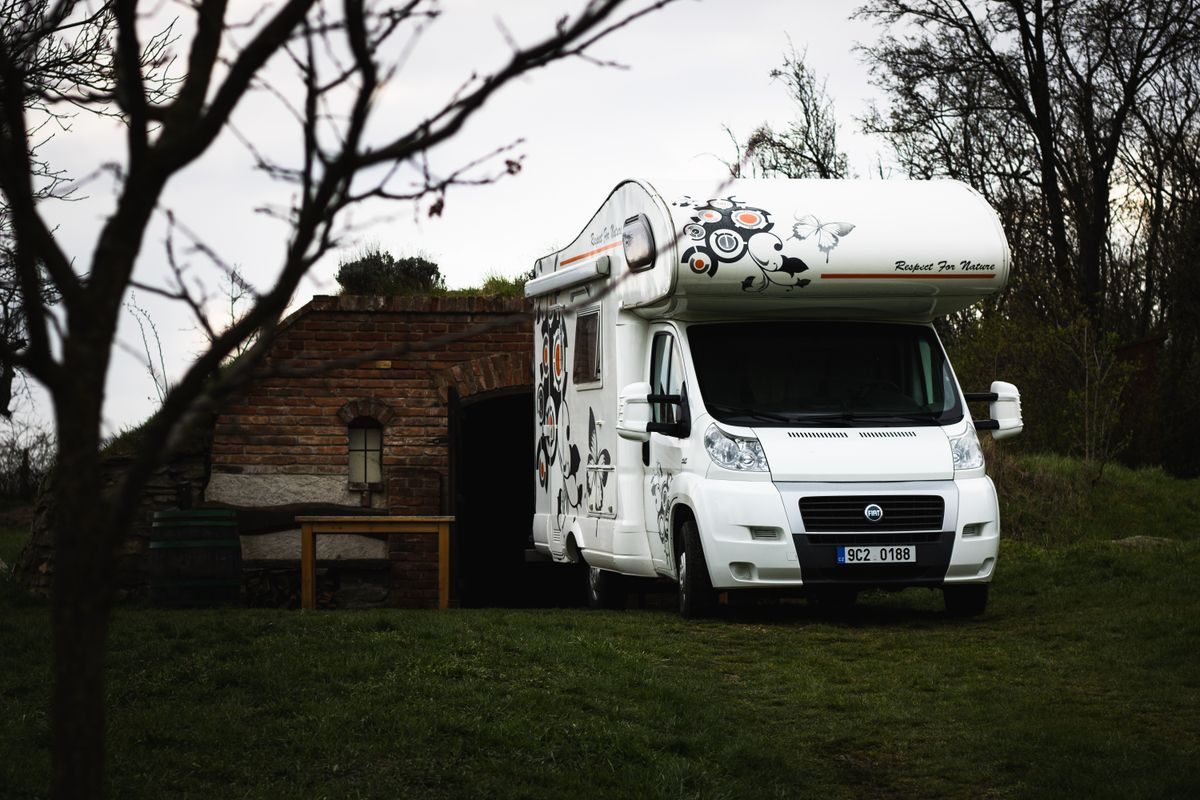
- 80mm: for heavier use, such as a motorhome, a builder's van, a shared drive or a spot where delivery lorries sometimes pull on. Also worth considering on soft clay ground.
Thicker blocks interlock better, because there's more face for the jointing sand to grip. The step up from 60mm to 80mm usually adds £4-£8 per m² in materials, so £200-£400 on a 50m² drive. If you're parking anything over 3.5 tonnes regularly, 80mm laid in 45-degree herringbone is the combination we'd recommend.
Matching a Pattern to Your Derby House
Derby's housing changes a lot from one part of the city to the next, and the pattern that looks right on one street can look odd on another.
Victorian and Edwardian terraces
Frontages on the older terraced streets nearer the centre are often only 4-5m wide and 5-6m deep, around 20-30m². Cutting waste matters more on small drives, because a larger share of the blocks are edge blocks. A 90-degree herringbone or a tumbled multi-size block in a warm red or brindle tends to suit the brickwork. In conservation areas, check before you lay anything.
Inter-war semis
The 1920s and 1930s semis in places like Littleover and Allestree often have wider frontages and room for two cars side by side. That usually means turning on the paving, so 45-degree herringbone earns its cost here. A soldier course in a darker shade picks out the bay window line nicely.
1960s-80s estates
The big estates in areas like Oakwood, Chellaston and Mickleover often have open-plan fronts and long, straight drives to a garage. A 90-degree herringbone or a well-laid stretcher bond across the line of travel suits the cleaner lines of these houses, and keeps the cost down on larger areas of 60m² or more.
New-builds
Many new-builds come with a basic tarmac or block drive that's often thin on sub-base. If you're upgrading, a light grey or charcoal block in 90-degree herringbone matches most modern brick. Check your deeds for any covenant on front garden surfaces first.
Derby Clay, Wet Winters and Permeable Block Paving
The pattern only holds if what's under it stays put. Much of Derby sits on Mercia Mudstone, a red-brown clay that swells when wet, shrinks in dry summers and drains very slowly. Through a typical October-to-March wet season, with around 40-50 air frosts a year in the East Midlands, any water trapped in the laying sand gets a long run at softening it.
On clay we dig deeper, usually 250-300mm in total, lay a geotextile membrane so the clay can't work up into the stone, and put down 200mm of compacted Type 1 sub-base instead of the 150mm that's enough on better ground. The sand bed goes on at a steady 30-50mm. Too thick and it compacts unevenly, which shows up as ruts in the wheel tracks within a year or two. The drive also needs a fall of at least 1 in 60 away from the house so water runs off rather than sitting in the joints.
Derby has a decent supply of block paving firms, but the experienced herringbone layers get booked up. Spring and early summer lead times of 4-8 weeks are normal, while late autumn slots can come up sooner as long as the weather allows the sand to be laid dry.
Permeable block paving patterns and the 5m² front garden rule
Since October 2008, paving more than 5m² of a front garden has only counted as permitted development if the surface lets water through, or if water runs off onto a lawn or border within your own boundary. The government's guidance on permeable surfacing of front gardens sets out what counts. A standard block drive draining onto the road needs planning permission, and on most Derby frontages of 30-50m² that rule applies.
Permeable blocks get round this. They have small spacer nibs that hold the joints open at around 5-8mm, filled with fine grit instead of sand, and they sit on an open-graded stone base with no fines. Most permeable blocks can still be laid in 90-degree herringbone, and many in 45-degree, so you don't lose the interlock. On Derby clay, water rarely soaks away fully, so the base usually includes a perforated pipe to a soakaway or approved outlet. Budget around 15-25% more than a standard block drive for the whole job.
Frequently Asked Questions About Block Paving Patterns in Derby
What is the strongest block paving pattern for a driveway?
45-degree herringbone. Its joints sit at an angle to traffic in every direction, so blocks can't creep along a straight line when cars turn or brake. 90-degree herringbone is close behind and suits most straight-in Derby drives.
Is herringbone block paving more expensive in Derby?
Yes, a little. 90-degree herringbone usually adds £5-£10 per m² over stretcher bond, and 45-degree adds £10-£20 per m², mostly because of the extra angled cuts and 8-12% waste. On a 50m² drive that's roughly £500-£1,000.
Can I use basketweave block paving on a driveway?
It's not recommended where cars turn, because its straight joints run in both directions and let blocks creep. It works well on patios, paths and small decorative panels away from the wheel tracks.
What thickness of block paving do I need for a car?
60mm blocks are the standard for a domestic driveway. Use 80mm for motorhomes, heavy vans or shared drives, and keep 50mm blocks for patios and paths.
Does permeable block paving come in herringbone?
Most permeable blocks can be laid in 90-degree herringbone, and many in 45-degree. You keep the interlock and stay within the 5m² front garden rule without needing planning permission.
Ready to work with Trade Smart Driveways & Landscaping?
Let's connect! We’re here to help.
Send us a message and we’ll be in touch.
Or give us a call today at 111-222-3333
Agency Contact Form
More Marketing Tips, Tricks & Tools
Resin Over an Existing Driveway in Derby: When Overlaying Concrete or Tarmac Works and When It Fails