Garden and Driveway Drainage in Derby: Solving Waterlogging and Standing Water
If your Derby lawn squelches underfoot from November to March, or a puddle sits across your driveway for days after rain, you're not unlucky - you're on clay. Heavy, slow-draining clay sits under most of Derby, and it holds water like a bathtub. Clay drains at under 10mm an hour against 50mm-plus for sandy soil, so a downpour that vanishes in a Nottinghamshire sandy garden lingers for days here. Add 40 - 55 frost nights a year and a long damp season, and standing water isn't just a nuisance - it heaves paving, rots fence posts and drowns lawns. The good news is that almost every waterlogging problem has a fixable cause. This guide walks through diagnosing what's actually wrong, then the real 2026 costs of the fixes: soakaways from £600, channel drains from £40 a metre, French drains, and permeable surfaces that stop the problem at source.
First, Diagnose Why Your Garden Holds Water
Before spending a penny on drainage, work out what's actually happening, because the fix for a compacted lawn is nothing like the fix for a driveway that sheds water the wrong way. Dig a test hole 300mm deep, fill it with water, let it drain, then fill it again and time it. If the second fill takes more than 4 hours to clear, you have a genuine drainage problem, not a one-off soaking.
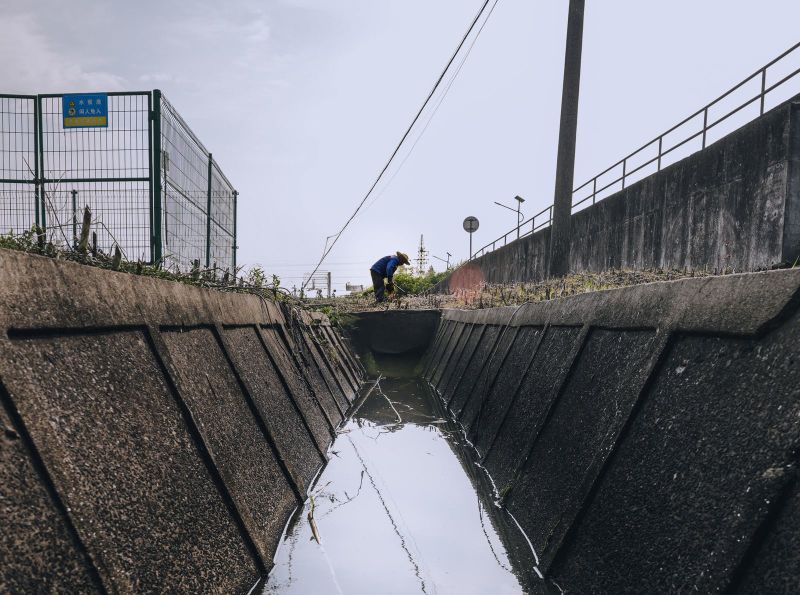
In Derby, the answer is usually one of three things: heavy clay subsoil that won't let water through, a compacted or capped surface layer sealing the ground, or water being directed the wrong way by falls, gutters or a hard surface. The RHS guidance on managing heavy clay soils is a good primer on why clay behaves this way - it holds a high proportion of water in the tiny gaps between particles and drains painfully slowly. If you want someone to survey the ground and tell you which of the three you're dealing with before quoting a fix, Tradesmart Driveways & Landscaping diagnoses and solves drainage problems across Derby rather than defaulting to the most expensive option.
The Cheap Fixes That Sometimes Work
Not every wet garden needs excavation. A lawn that's simply compacted - common on new-build plots around Chellaston and Mickleover where the topsoil was rolled flat by machinery - often improves dramatically from hollow-tine aeration and a sandy top dressing, at £2 - £4 per m². Redirecting a downpipe that's dumping roof water onto a border, or clearing a blocked gully, can solve a puddle for the price of an afternoon. Rule these out before you dig.
Soakaways: The Workhorse Fix
A soakaway is a large underground void - traditionally rubble, now usually plastic crates wrapped in geotextile - that collects water and lets it seep into the ground slowly. It's the standard fix for a waterlogged lawn or a driveway with nowhere else to send its runoff. A domestic soakaway in Derby costs £600 - £1,500 installed, depending on size and access.
The catch on clay is real: a soakaway only works if the ground below it drains, and Derby clay often doesn't. That's why a proper installer digs the soakaway deep enough to reach a more permeable layer, or oversizes the crate volume to buffer the water while it slowly releases. A soakaway must also sit at least 5 metres from the house to protect foundations, which is a genuine constraint on Derby's tighter terraced plots. Where clay is severe, a soakaway alone can underperform, and it's paired with a piped outfall or a French drain instead.
Channel Drains for Driveways and Patios
If your problem is water sheeting across a driveway or pooling at a patio door, a channel drain (also called a linear or ACO drain) is usually the answer. It's a slotted or grated channel set flush into the surface that catches water along its whole length and pipes it away to a soakaway or drainage point. Supplied and installed, budget £40 - £90 per linear metre for a domestic polymer channel, more for heavy-duty galvanised or iron grates on a driveway that takes vehicle loads.

The commonest Derby scenario is a sloping driveway that runs water straight at the garage or front door - typical on the stepped plots in Allestree, Darley Abbey and the higher ground on the north side of the city. A channel drain across the threshold intercepts it. One across the base of a slope, plus a proper fall built into the surface, stops water reaching the house at all. Getting the fall right (roughly 1:80 towards the channel) matters as much as the channel itself.
Don't Forget the Outfall
A channel drain is only half a system - the water it collects has to go somewhere. That's a soakaway, an existing surface-water drain, or a rain garden. Connecting driveway runoff into the foul sewer is not allowed and can land you with a bill from Severn Trent, so the outfall needs designing properly, not just piping to the nearest gully.
French Drains for Waterlogged Lawns and Boundaries
A French drain is a gravel-filled trench with a perforated pipe running along the bottom, laid to a fall, that intercepts water moving through the ground and carries it away. It's the go-to for a lawn that stays wet along one edge, a boundary where water runs in from next door's higher plot, or a soggy strip against a retaining wall. Expect £50 - £110 per linear metre installed, depending on depth and how far the outfall sits.
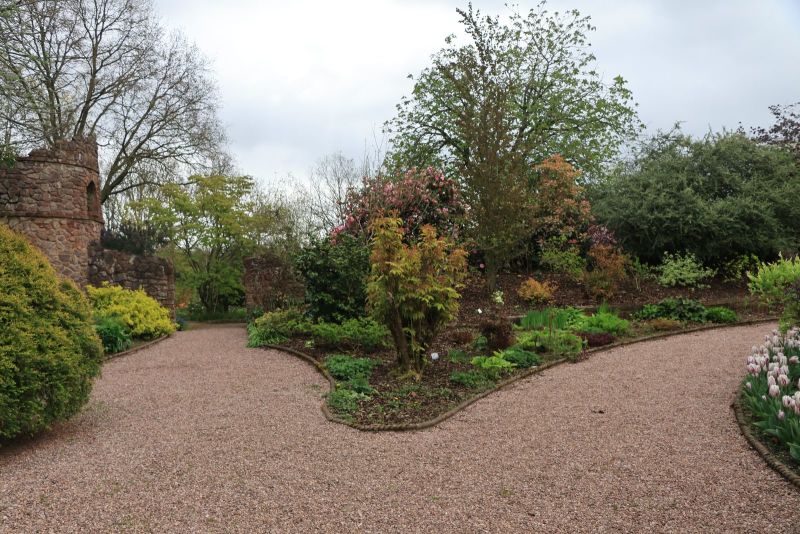
On Derby clay, French drains earn their keep because they don't rely on the surrounding ground being permeable the way a soakaway does - they actively move water sideways to a discharge point. A typical rear-garden run of 10 - 15 metres to intercept water crossing a lawn comes in around £600 - £1,500. The pipe must be laid on a consistent fall and wrapped in geotextile so the surrounding clay doesn't silt it up within a few winters, which is exactly the corner cheap jobs cut.
Permeable Surfaces: Stopping the Problem at Source
The most durable driveway fix isn't draining water away - it's using a surface that lets rain soak straight through. Resin-bound surfacing, permeable block paving laid with open joints over an aggregate sub-base, and gravel all let water pass into the ground rather than sheeting off. On a driveway this also keeps you the right side of the planning rules: since 2008, a new front driveway over 5m² that's impermeable and drains to the road needs planning permission, while a permeable one generally doesn't. The government's guidance on permeable surfacing of front gardens sets out exactly how this works, and the Planning Portal's page on paving your front garden confirms which surfaces keep you inside permitted development.
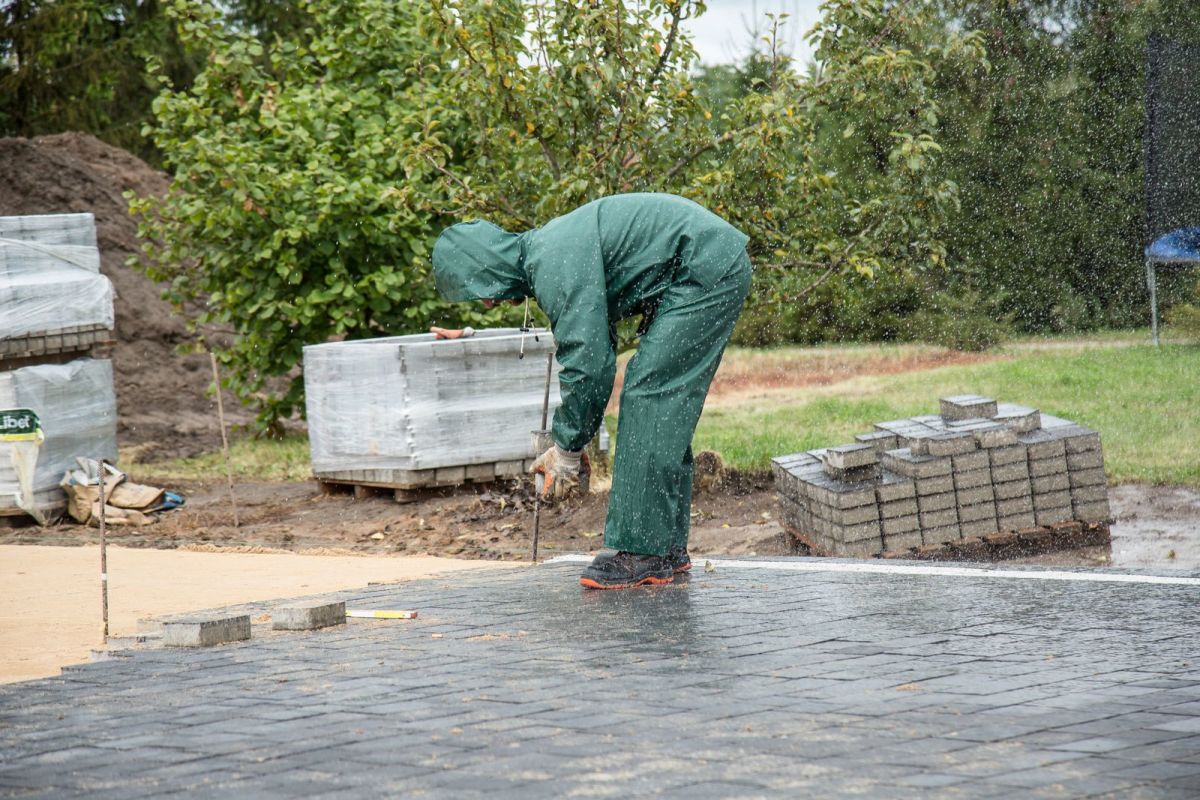
Permeable systems cost more to build because the sub-base does the drainage work - budget £90 - £160 per m² for permeable resin or block paving against £60 - £90 for a standard impermeable equivalent. On Derby clay the sub-base has to be deep enough and free-draining enough to hold a heavy downpour, often with an overflow to a soakaway for the worst storms, so specification matters. Done right, it removes standing water permanently instead of managing it.
Why Fixing Drainage in Derby Can't Wait
Standing water isn't cosmetic. Water that sits and then freezes on Derby's 40 - 55 frost nights expands by around 9% and heaves paving, cracks pointing and lifts block paving out of level. It rots fence posts and timber sleepers from the base up, and it drowns lawn roots so the grass thins and moss takes over. A waterlogged garden left three or four winters does damage that costs far more to put right than the drainage would have.
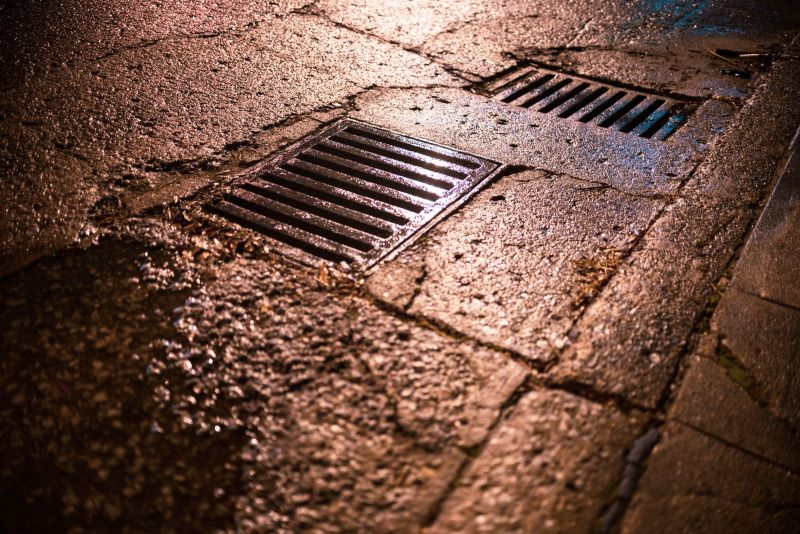
There's a wider reason too. Surface water flooding has become a more visible problem in parts of Derby, and driveways that fire rainwater straight onto the pavement - multiplied across a whole street - add to it. Sustainable drainage (SuDS) principles, where each property manages its own runoff through soakaways, permeable surfaces and rain gardens, are increasingly the expected standard for new work, and they happen to be the same measures that keep your own garden dry.
Getting Drainage Work Quoted Properly in Derby
Drainage is the trade where cheap quotes cost the most, because the expensive part - the excavation, the fall, the outfall, the geotextile - is invisible once it's backfilled. A good quote states what's causing your waterlogging, specifies the fix (soakaway size, channel length, French drain run), names where the water discharges to, and prices the outfall as a line item rather than assuming it away.
Derby has a solid supply of landscapers and groundworkers, but genuine drainage specialists are fewer, and demand spikes every autumn once the first heavy rains expose every wet garden in the city. Quoting in late summer usually gets you better availability than a November panic. Before you commit, checking anyone you shortlist against the TrustMark register of government-endorsed tradespeople is a quick way to filter out operators who'll backfill a trench with no fall and disappear.
Summary Table: Derby Drainage Solution Costs 2026
The short version: diagnose before you dig, treat Derby's clay as the root cause rather than an afterthought, and always make sure the water has a legal, well-built place to go.
---
FAQ
Q: Why is my Derby garden always waterlogged?
A: Almost always heavy clay soil, which sits under most of Derby and drains at under 10mm an hour against 50mm-plus for sandy ground. Water simply can't get through it fast enough. Compaction (common on new-build plots) and water being directed the wrong way by falls or downpipes make it worse. A simple test - dig a 300mm hole and time how long a second fill of water takes to drain - tells you whether you have a real drainage problem or a one-off soaking.
Q: How much does a soakaway cost in Derby?
A: A domestic crate soakaway costs £600 - £1,500 installed, depending on size and access. On Derby's clay it needs to be dug deep enough to reach a more permeable layer or oversized to buffer the water, and it must sit at least 5 metres from the house to protect foundations. Where clay is severe, a soakaway is often paired with a French drain or piped outfall rather than used alone.
Q: What's the difference between a channel drain and a French drain?
A: A channel drain is a grated channel set into a hard surface like a driveway or patio to catch water running across the top, from £40 - £90 per linear metre. A French drain is a gravel-filled trench with a perforated pipe that intercepts water moving through the ground, ideal for a waterlogged lawn or boundary, from £50 - £110 per linear metre. Driveways usually need a channel drain; soggy lawns usually need a French drain.
Q: Can I fix a flooded driveway without planning permission?
A: Yes, and a permeable surface is the cleanest way. A new front driveway over 5m² that's impermeable and drains to the road needs planning permission, but a permeable one - resin-bound, permeable block paving or gravel - generally doesn't, and it stops standing water at source. If you keep an impermeable surface, directing the runoff to a soakaway on your own land also keeps you inside permitted development.
---
Ready to work with Trade Smart Driveways & Landscaping?
Let's connect! We’re here to help.
Send us a message and we’ll be in touch.
Or give us a call today at 111-222-3333
Agency Contact Form
More Marketing Tips, Tricks & Tools